
why can’t i sleep? the science behind better sleep
By Joyce Chong, Senior Clinical Psychologist
Poor sleep can significantly impact mood, concentration, memory, physical health, and wellbeing. For people experiencing prolonged stress or burnout, often the brain remaining in a state of alertness even when the body is ready for rest. Whether you're struggling with insomnia, waking frequently during the night, or simply wondering how to improve your sleep quality,understanding how sleep works is the first step. Sleep is not something you can force—your brain already knows how to sleep. The key is understanding the biology that creates the optimal conditions for sleep - sleep pressure, circadian rhythm (body clock), and yournervous system’s balance between alertness and relaxation. In this article, we'll explore the science of sleep stages, deep sleep, REM sleep, and common sleep disorders, while examining how evidence-based strategies including principles from Cognitive Behavioural Therapy for Insomnia (CBT-I)— can help you work with your biology to achieve more restorative sleep.
in short…
Better sleep comes from working with your biology - not trying harder to sleep. By taking steps to align your body clock, build sleep pressure, and calm your nervous system, you enhance the conditions your brain needs for restorative sleep.
how does sleep work? Understanding sleep stages, sleep pressure, and your circadian rhythm
In order to improve sleep let’s first learn about the stages of sleep. Sleep occurs in cycles – each cycle is approximately 90-110 minutes. Each cycle includes four stages (3 non-REM and 1 REM), each with distinct roles:
Stage 1 (N1; light sleep), which is the transition from wakefulness to sleep. During this stage brain activity slows, and your muscles start to relax. The light sleep stage usually lasts for a few minutes.
Stage 2 (N2; light sleep), lasts for between 10-25 minutes of sleep. During this stage the body’s relaxation deepens, body temperature drops, and heart rate and breathing rate slow down.
Stage 3 (N3; deep sleep), is the most restorative stage of sleep during which the body recovers and grows. This stage lasts around 20-40 minutes, and it’s thought that deep sleep contributes to memory consolidation, physical restoration, and immune function.
REM sleep, lasting about 10 to 60 minutes, and is important for cognitive functioning – memory, learning, and creativity. REM sleep is also the stage most important in emotion regulation.
Different stages of sleep perform different jobs for the brain. During deep sleep (slow-wave), the brain strengthens memories and supports physical restoration. During REM sleep, the brain processes emotional experiences and is thought to help regulate emotions.
drivers of sleepiness
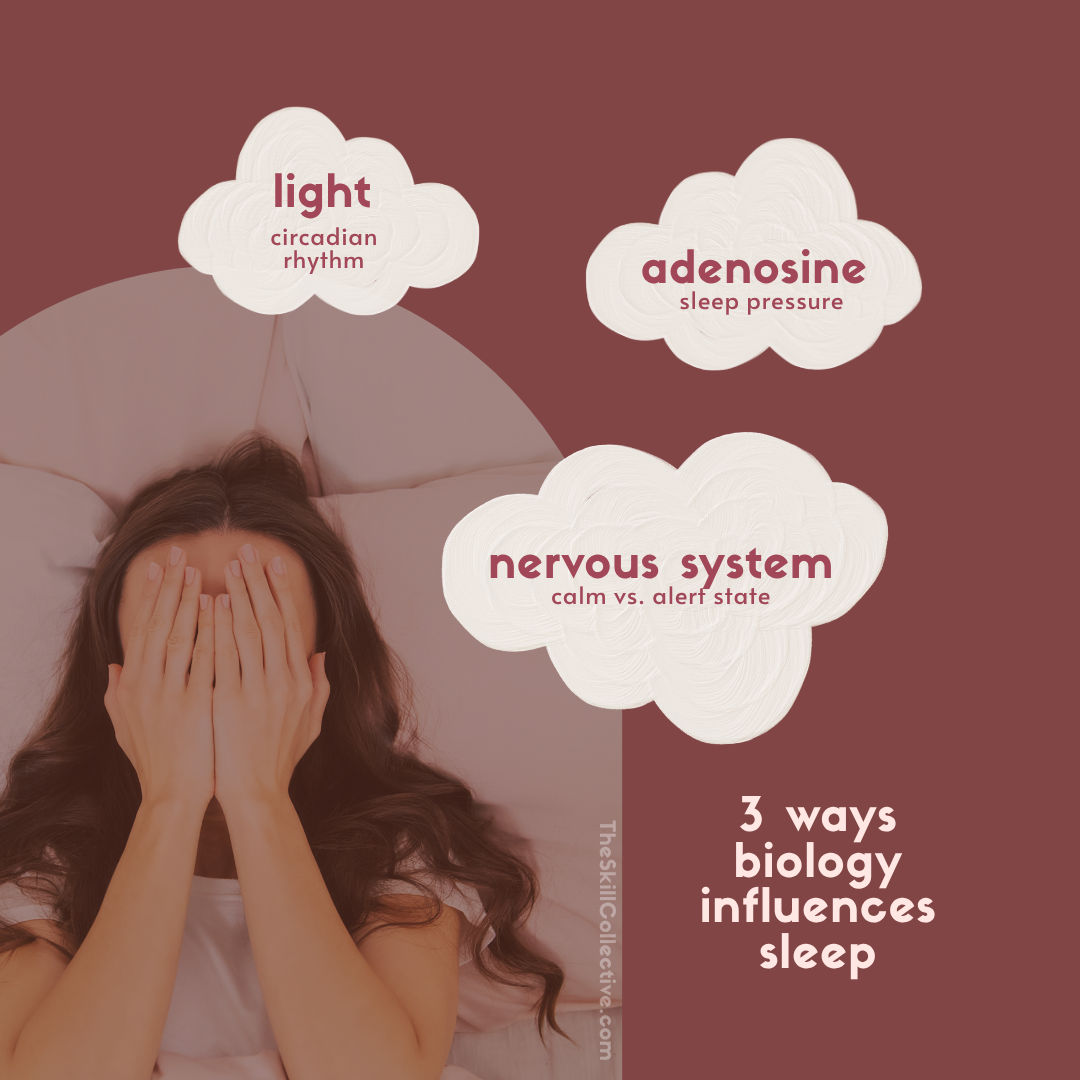
Your brain is constantly interpreting cues from its environment about whether it’s time to be awake or sleep. Two biological processes drive sleepiness - Sleep pressure (homeostatic sleep drive) and circadian rhythm.
(1) Sleep pressure
Sleep pressure is what drives your body to feel sleepier, and is driven by a chemical called adenosine. Throughout the day, adenosine builds up in the brain, leading you to feel sleepier. When you sleep, adenosine levels decrease, helping you to awake feeling refreshed. Two factors affect sleep pressure:
Caffeine blocks adenosine receptors in the brain, reducing the brain’s ability to detect accumulated sleep pressure, leading to you feeling more alert. As caffeine wears off, the accumulated adenosine can bind to its receptors, leading to increased fatigue.
Naps reduce built-up sleep pressure. Whilst a short nap earlier in the day may improve alertness, long or late-afternoon naps reduce the sleep drive needed at night and make it harder to fall asleep.
(2) Circadian Rhythm (aka your body clock)
Your circadian rhythm is a 24-hour internal clock that is influenced by light, promoting alertness during the day (when levels of light are high), and sleepiness at night (when levels of light are low), by regulating melatonin, body temperature, and other biological processes. Keeping this body clock aligned can be achieved through consistent sleep-wake times and regular morning sunlight.
Certainly, these drivers of sleepiness combine with the influence of the nervous system, which signals to your brain whether to stay alert (‘fight or flight’) or whether it’s time to wind down (‘rest and digest’).
what affects sleep? five signals that influence sleep
Your daily habits can push your body clock or nervous system, so let’s take a closer look at which daily habits matter.
(1) Light: How morning and evening light levels influence sleepiness
Morning sunlight alerts your brain to wake up, so rather than spending an hour in bed doomscrolling upon waking, try to spend time in natural light to support your body clock.
Lower levels of light in the evening cue your brain to prepare for sleep, but artificial evening light is unfortunately part of modern life. Many people mistakenly believe that turning on a blue light filter negates the impact of light exposure on sleep. However, the (absolute) levels of any light matters – high levels of any light can still signal to your body clock that it is awake time, thus it’s better to reduce the overall amount of light in the hour or two before bed.
Modern life sends confusing signals to the brain – light from screens and in the environment promote alertness, constant connection to work or studies means you’re switched on.
(2) Temperature
In the evening, your body temperature naturally starts to lower, and this is one of the signals that promotes sleep onset. You can help this process along by taking a warm shower approximately 1-2 hours before bedtime – the post-shower cooling enhances the cues for sleepiness and has been linked to falling asleep more easily.
(3) Caffeine blocks the build up of sleep pressure
It’s easy to reach for a cup of coffee to reduce tiredness, but caffeine doesn’t actually remove tiredness. Rather, it turns down the volume on your body’s sleep signal by blocking the adenosine receptors in the brain. Once it wears off, your brain can again feel the impact of adenosine and sleep pressure.
(4) Alcohol: Helping you fall asleep but affecting your sleep quality
Alcohol may help you to feel sleepy initially, but it affects your sleep quality by increasing night-time wake ups, suppressing REM sleep early on in the night, and can worsen snoring and sleep apnoea (more on sleep apnoea later).
(5) Exercise
Exercise can be restorative, but if you’re already highly activated from a stressful day, intense exercise late at night might not always support recovery. Vigorous exercise close to bedtime can temporarily increase alertness and arousal. This can keep core body temperature elevated, making it harder to wind down. If you notice evening exercise affects your sleep, try moving higher-intensity workouts to earlier in the day, or choose gentler evening movement to support the transition into sleep.
When your brain won’t switch off: How stress and thoughts affects sleep.
Whilst sleep is a biological process, stress and burnout can make it harder for the brain to transition from alertness to rest. At night, mentally replaying conversations, planning tomorrow’s workload, or feeing unable to ‘switch off’ from a long list of responsibilities can keep you in a state of arousal rather than the relaxed state needed for sleep.
Additionally, unhelpful thoughts about sleep can also contribute to insomnia – dysfunctional beliefs about sleep (e.g. “If I don’t get to sleep soon I won’t be able to function tomorrow”, or “I need to get 8 hours of sleep so I’d better fall asleep in the next 20 minutes.”) fuel arousal – a state that is the opposite of the relaxed state your body needs so it can fall asleep.
In such instances, try engaging in slow breathing – it can promote falling asleep. You can also try CBT-I (Cognitive Behaviour Therapy for Insomnia) which helps with addressing unhelpful thoughts and thought processes that interfere with sleep.
your sleep will change across life (and that’s okay)

Sleep is not a fixed experience – it changes across your life in response to changes to your biology, hormones, and environment. Understanding these transitions can help you to better support normal sleep disruption.
Adolescence is a time when the body clock naturally shifts later, leading teens to move towards later sleep and wake times.
Stressful life transitions heighten arousal, making it harder to reach the relaxed state needed for your body to fall asleep.
Shift work: Changes in schedules can throw off circadian timing, leading to a mismatch between the body clock, environment (light), and daily demands as the body tries to sleep at a time when the environment promotes wakefulness.
Pregnancy: Changes to hormones and physical discomfort associated with pregnancy can disrupt sleep.
New parenthood: Newborns naturally wake frequently throughout the night for feeding and comfort, naturally impacting parents’ capacity to gain restful, continuous sleep.
Perimenopause: Fluctuations in oestrogen and progesterone can result in difficulties falling asleep, staying asleep, night sweats, and even increased anxiety. In turn, this can lead to fatigue during the day.
Ageing and older adulthood: With age, sleep becomes lighter with more frequent awakenings and changes to sleep patterns.
As you can see, natural variations in sleep across the lifespan are to be expected. However, if these changes persist. cause you distress, and interfere with your daily functioning, it may help to speak to a professional who can assess for the presence of sleep disorders.
when sleep goes wrong: knowing when to seek professional help
Whilst changes to sleep patterns are to be expected with different life stages and challenging life events, seek out professional help if sleep problems become persistent, distressing, or affect daytime functioning. These may reflect underlying sleep disorders such as:
Chronic insomnia encompassing difficulties falling or staying asleep. Poor sleep, worry about sleep, and increased alertness can then reinforce each other.
Sleep apnoea, where breathing is repeatedly blocked during sleep, causing brief awakenings and disrupted sleep quality. Signs of sleep apnoea include regular snoring, gasping/choking during sleep, and excessive daytime sleepiness. With sleep apnoea, you may get many hours in bed, but not feel refreshed as your sleep is disrupted.
Restless leg syndrome (and movement disorders) occur when you experience uncomfortable sensations (e.g. tingling) at night in your legs, together with an urge to move them. Understandably, this can interfere with falling asleep.
Circadian rhythm disorders which are when your internal body clock is out of sync with the timing required for your daily functioning. Examples of this include delayed sleep phase, shift work disorder).
Other conditions interfering with sleep can include chronic pain, menopause-related changes, medications, alcohol or substance use, anxiety, or medical conditions.
A thorough assessment of persistent sleep problems by a sleep physician is a good starting point to help you improve your sleep.
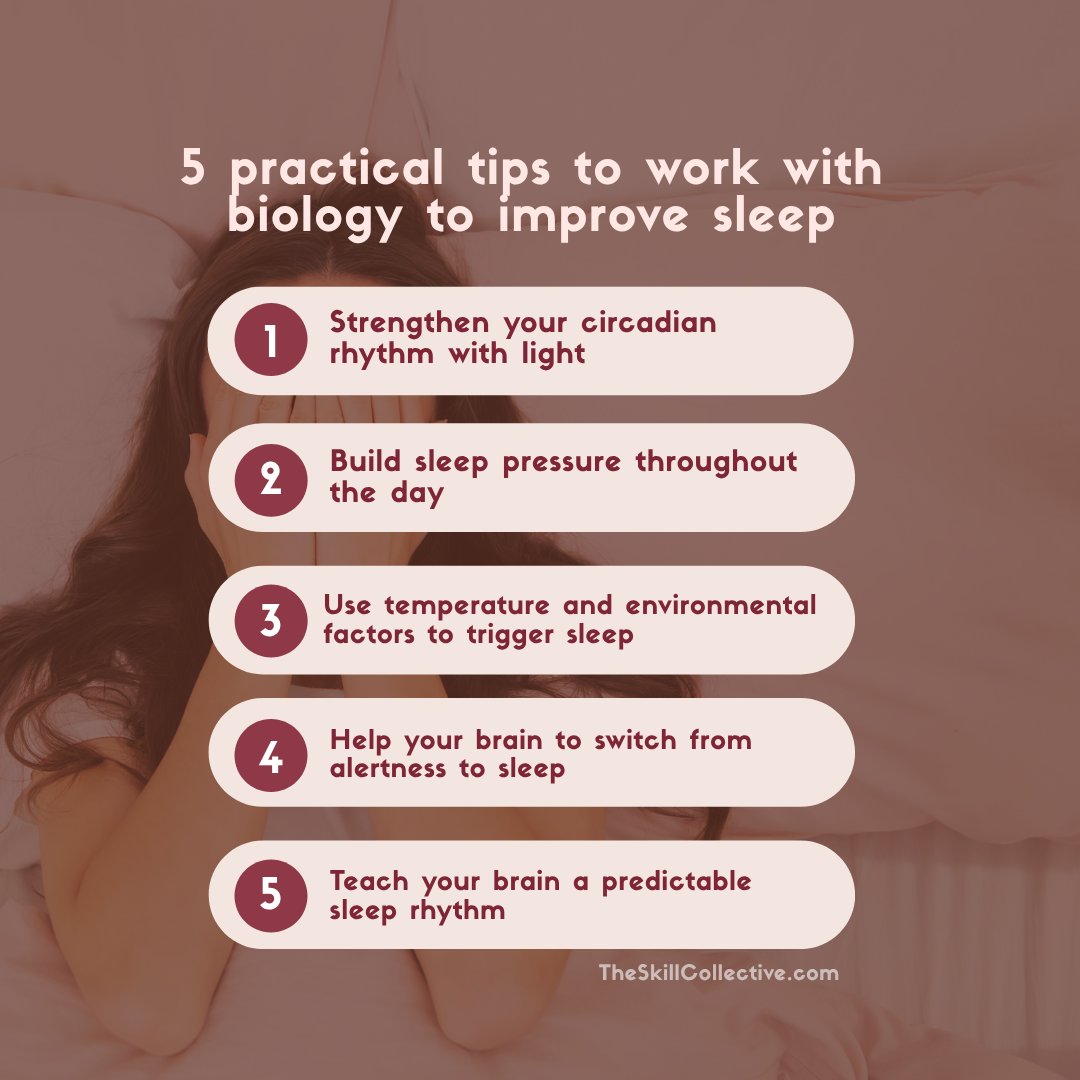
5 practical tips to work with biology to improve your sleep
Sleep is not something you can force. It is a biological process controlled by your brain, body clock, and nervous system. The goal is not to “try harder” to sleep—rather, it is to create conditions that allow sleep to happen naturally.
1. Strengthen your circadian rhythm with light
Light is one of the strongest signals for your body clock, so help your brain use the contrast between bright days and dim evenings so you know when to be alert and when to prepare for sleep. Try the following:
Morning light tells your brain the day has begun, so try to keep your wake time consistent, and get natural light exposure shortly after waking.
If facing short days and late sunrises, try to get outdoors, sit near a window, or make your daytime environment brighter (even if it is indoors).
At night, signal to your brain that it’s time to sleep with lower light levels. Bright lights – not just blue light – suppress melatonin and keep you more alert, so dim lights, reduce screen brightness, to create a darker, calmer environment as you near bedtime.
2. Build sleep pressure throughout the day
Sleep pressure increases throughout the day when adenosine is allowed to accumulate to a critical point near bedtime. Modern lifestyle habits can interfere with this, so:
Stay awake and active throughout the day to build sleep pressure
Limit caffeine intake late in the day as it interferes with the influence of adenosine
If you must nap, keep it short and avoid napping later in the day
3. Use temperature and environmental factors to trigger sleep
The cooling of the body’s temperature in the evening helps signal the brain to prepare to sleep. Aid this process by:
Having a warm shower about 1-2 hours before bed – the subsequent drop in core temperature helps to promote falling asleep.
Maintaining a cool bedroom environment.
Additionally, minimise light and noise in your bedroom environment to reduce stimulation and promote sleep.
4. Help your brain to switch from alertness to sleep: Reduce stimulants, utilise breathwork, and check your thoughts
Sleep occurs most easily when your nervous system shifts from ‘fight or flight’ to ‘rest and digest’. Here are some habits to support this transition:
Reduce stimulant use near bedtime – not just caffeine, but also nicotine, prescription medications, and even decongestants.
Choose calming over stimulating activities – true crime podcasts, horror movies, social media debates, and doomscrolling can all increase emotional arousal.
Exercise regularly but time it wisely – whilst exercise is great for promoting sleep, vigorous exercise too close to bedtime may lead to you feeling more alert.
Reduce physical arousal through breathwork: Slow your breath down to around 6-10 breaths per minute – this pacing activates the ‘rest and digest’ system, reducing heart rate and arousal and promotes sleep.
Quiet your mind: Notice if your brain shifts into problem-solving or worrying mode, or if your expectations of sleep increases your anxiety. Instead of diving into fixing these thoughts (which will increase alertness), try to acknowledge them and return your focus to breathing. As part of this, avoid watching the clock as this can increase pressure and frustration.
5. Teach your brain a predictable sleep rhythm
Your brain learns from patterns. One night of poor sleep won’t derail things, but constantly changing your sleep schedule can make it harder for your body to settle into a sleep rhythm. One of the most effective ways to strengthen your body clock is to keep a consistent wake time – even when you’ve slept poorly.
It may be tempting to sleep in or nap the next day, but these strategies can reduce sleep pressure and make it harder to fall asleep the following night. Focus instead on giving your brain consistent timing cues to help it learn when it’s time to be awake and when it’s time to sleep.
in summary…
Sleep is not something you can force - your brain already knows how to sleep. Instead, it’s something you support. Work with your biology by giving your brain consistent signals that it’s time to be awake and when it’s time to wind down -strengthen your body clock, build sleep pressure, and calm your nervous system to create the conditions for restorative sleep. And if those conditions aren’t enough, seeking professional help is the next evidence-based step (see below in our Tailored Support section).
Note: This article is intended for general education and is not a substitute for personalised medical advice. If your sleep difficulties are persistent, severe, or affecting your health or safety, speak with your GP or another qualified healthcare professional.
Frequently Asked Questions about sleep
-
It’s possible to feel exhausted but still be unable to sleep. Feeling tired and feeling sleepy are not always the same thing. Sleepiness is driven largely by sleep pressure and your circadian rhythm, while feeling tired can also reflect stress, emotional exhaustion, illness, or low energy. If your brain is receiving signals that it needs to stay alert—such as bright light, worry, stimulating activities, or stress—it may be difficult to transition into sleep even when you feel exhausted.
-
Most adults need around 7–9 hours of sleep per night, although individual needs vary. Sleep quality matters as much as sleep quantity. Someone who spends eight hours in bed but has frequent awakenings may not feel as refreshed in the morning as someone with more consolidated sleep.
-
Many people struggle to switch off at night because the brain remains in a state of alertness after a busy or stressful day. Planning, problem-solving, replaying conversations, or thinking about unfinished responsibilities can increase cognitive arousal and make it harder to transition into sleep. Focus on reducing arousal, and create a clear boundary between work and rest so as to support better sleep.
-
Sleep occurs in cycles, and people often experience short periods of wakefulness between cycles. The concern is less about waking itself and more about whether awakenings are prolonged, distressing, frequent, or affecting daytime functioning.
-
Yes. Anxiety increases both cognitive and physical arousal, making it harder to fall asleep and easier to wake during the night. Worry about sleep itself can also become part of the problem, creating a cycle where fear of poor sleep increases alertness and makes sleep less likely. CBT-I specifically targets these thoughts and behaviours that maintain insomnia.
-
Caffeine sensitivity varies between individuals, but caffeine can remain active in the body for many hours after consumption. Consider experimenting with moving caffeine earlier in the day or reducing your intake to see whether sleep improves.
-
If you are awake for a prolonged period and becoming frustrated, it is often better to get out of bed and do a quiet, low-stimulation activity in dim light until you feel sleepy again. This is a core principle of CBT-I, which helps strengthen the association between your bed and sleep rather than wakefulness and frustration.
-
Consider seeking professional support if sleep difficulties persist, are distressing, interference with your daytime functioning, or if you experience symptoms such as loud snoring, restless legs, excessive daytime sleepiness, or have moments when you’re gasping for air. Evidence based treatments are available.
Tailored support
If you find you need additional tailored support regarding your sleep, or if you believe that it’s tied up with high levels of stress/burnout, anxiety, or low mood, why not reach out to us? Our team of psychologists can help you build a plan. Below are some of our psychologists who help with sleep.












References
Baker, F. C., de Zambotti, M., Colrain, I. M., & Bei, B. (2018). Sleep problems during the menopausal transition: Prevalence, impact, and management challenges. Nature and Science of Sleep, 10, 73–95. https://doi.org/10.2147/NSS.S125807
Borbély, A. A., Daan, S., Wirz-Justice, A., & Deboer, T. (2016). The two-process model of sleep regulation: A reappraisal. Journal of Sleep Research, 25(2), 131–143. https://doi.org/10.1111/jsr.12371
Brown, R. E., Basheer, R., McKenna, J. T., Strecker, R. E., & McCarley, R. W. (2012). Control of sleep and wakefulness. Physiological Reviews, 92(3), 1087–1187. https://doi.org/10.1152/physrev.00032.2011
Carney, C. E., Harris, A. L., Moss, T. G., & Edinger, J. D. (2010). Distinguishing rumination from worry in clinical insomnia. Behaviour Research and Therapy, 48(6), 540–546. https://doi.org/10.1016/j.brat.2010.03.004
Duffy, J. F., & Czeisler, C. A. (2009). Effect of light on human circadian physiology. Sleep Medicine Clinics, 4(2), 165–177. https://doi.org/10.1016/j.jsmc.2009.01.004
Edinger, J. D., Wohlgemuth, W. K., Radtke, R. A., Marsh, G. R., & Quillian, R. E. (2001). Cognitive behavioral therapy for treatment of chronic primary insomnia: A randomized controlled trial. JAMA, 285(14), 1856–1864. https://doi.org/10.1001/jama.285.14.1856
Goldstein, A. N., & Walker, M. P. (2014). The role of sleep in emotional brain function. Annual Review of Clinical Psychology, 10, 679–708. https://doi.org/10.1146/annurev-clinpsy-032813-153716
Haghayegh, S., Khoshnevis, S., Smolensky, M. H., Diller, K. R., & Castriotta, R. J. (2019). Before-bedtime passive body heating by warm shower or bath to improve sleep: A systematic review and meta-analysis. Sleep Medicine Reviews, 46, 124–135. https://doi.org/10.1016/j.smrv.2019.04.008
Kecklund, G., & Axelsson, J. (2016). Health consequences of shift work and insufficient sleep. BMJ, 355, i5210. https://doi.org/10.1136/bmj.i5210
Mindell, J. A., Cook, R. A., & Nikolovski, J. (2015). Sleep patterns and sleep disturbances across pregnancy. Sleep Medicine, 16(4), 483–488. https://doi.org/10.1016/j.sleep.2014.12.006
Nedergaard, M., & Goldman, S. A. (2020). Glymphatic failure as a final common pathway to dementia. Science, 370(6512), 50–56. https://doi.org/10.1126/science.abb8739
Rupp, T. L., & Landolt, H.-P. (2022). Adenosine, caffeine, and sleep–wake regulation: State of the science and perspectives. Journal of Sleep Research, 31(4), e13597. https://doi.org/10.1111/jsr.13597
Sadeh, A., Tikotzky, L., & Scher, A. (2010). Parenting and infant sleep. Sleep Medicine Reviews, 14(2), 89–96. https://doi.org/10.1016/j.smrv.2009.05.003
Sateia, M. J. (2014). International classification of sleep disorders—Third edition: Highlights and modifications. Chest, 146(5), 1387–1394. https://doi.org/10.1378/chest.14-0970
Tsai, H. J., Kuo, T. B. J., Lee, G. S., & Yang, C. C. H. (2015). Efficacy of paced breathing for insomnia: Enhances vagal activity and improves sleep quality. Psychophysiology, 52(3), 388–396. https://doi.org/10.1111/psyp.12333
Xie, L., Kang, H., Xu, Q., Chen, M. J., Liao, Y., Thiyagarajan, M., O’Donnell, J., Christensen, D. J., Nicholson, C., Iliff, J. J., Takano, T., Deane, R., & Nedergaard, M. (2013). Sleep drives metabolite clearance from the adult brain. Science, 342(6156), 373–377. https://doi.org/10.1126/science.1241224
Is perfectionism driving you to procrastinate? It may seem counterintuitive, but a fear of failure can stand in the way of you achieving your goals. Read on to learn more…