
By Joyce Chong, Clinical Psychologist
Burnout rarely happens overnight. It more likely develops gradually, when work stress builds up over time and recovery is not sufficiently achieved. Left unchecked, this chronic stress affects mood, concentration, sleep, and in turn affects relationships and your ability to function optimally at work or in daily life. In this article we share practical, psychologist-informed burnout prevention strategies to help you protect your wellbeing and sustain performance.
what is burnout and what causes it?
Burnout is a state of exhaustion - physical, mental, and emotional - resulting from prolonged stress. The World Health Organisation describes burnout as a syndrome resulting from chronic workplace stress that has not been successfully managed.
Burnout involves:
Feelings of exhaustion
Increased distancing from work
Reduced effectiveness or productivity.
Burnout can affect people across many areas of life, including students, parents and carers, high performers, and those balancing multiple responsibilities without adequate support or recover. Burnout is, however, most commonly discussed in the workplace. There are various factors contributing to burnout at work:
Workplace factors may include constant organisational change, job design and characteristics, demanding work environments, organisational culture (‘always on’, constant connection), and workload.
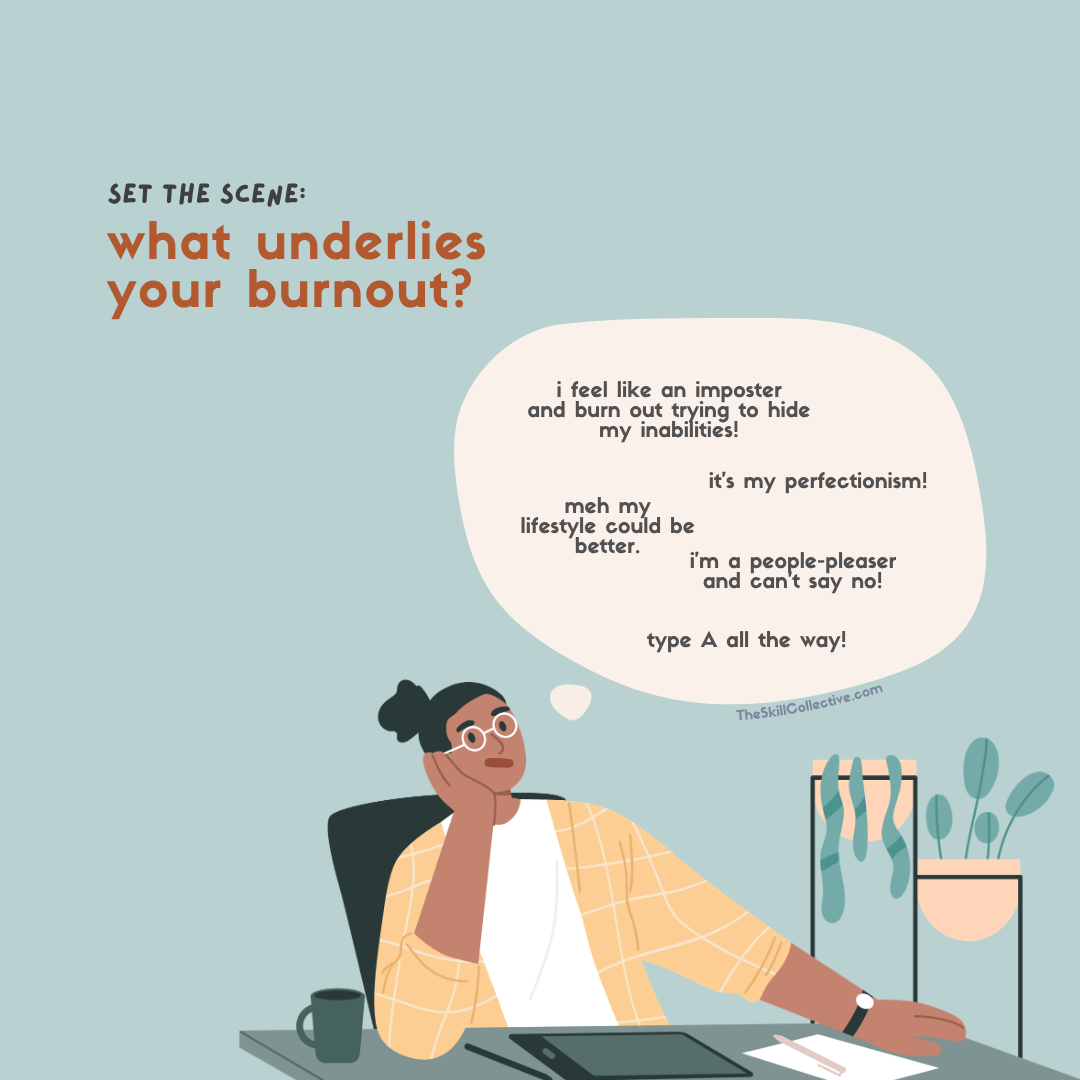
Individual factors include mindset, imposter syndrome, perfectionism, unhelpful social comparisons, being ‘early-career’ in your profession, and also unhelpful self-management techniques (boundary-setting, time management).
Whilst it can be hard to change workplace factors if you’re not in a position of influence, it can help to take a look at those individual factors that prevent burnout. More on that later - let’s first take a look at some early signs of burnout.
pay attention to chronic stress - not just crisis moments
Burnout rarely comes on suddenly. A more typical pattern is for it to start off as stress and escalate over time, fuelled by inadequate recovery. Don’t wait to hit breaking point before you slow down - start by noticing the smaller signs of accumulated stress. Regularly check in with yourself and ask:
Have I been feeling mentally exhausted more often than not?
Am I recovering properly between stressful periods?
Am I just ‘pushing through’ each week?
Have my healthy habits started to slip?
Are my thoughts more negative or pessimistic?
When stress builds gradually, it can seem ‘normal’ and difficult to recognise. Taking time to regularly reflect on these patterns can help you to identify the early warning signs of burnout before overwhelm and burnout set in.
What are early signs of burnout?
The challenge with burnout is that it often sneaks up on you. By learning the early signs of burnout, you can take action early on and focus on preventing further overwhelm. Burnout symptoms vary from person to person, but common early warning signs of burnout include:
Feeling emotionally exhausted - you have nothing left to give
Fatigue that doesn’t reset following rest
‘Brain fog’ - difficulties with concentration and focus
Irritability
Caring less about work
Headaches or muscle tension
Impacted sleep
Burnout prevention plan
If you’re looking to prevent burnout, here are some tips to help you get started.

Set your intention
One thing that can contribute to burnout is spending so much time chasing what you think you should focus on —productivity, pay rises, achievements, status — that you lose sight of what actually feels meaningful or fulfilling.
It’s easy to get caught up in being busy without stopping to ask whether how you spend your time and energy is really working for you. Taking a step back to reconnect with your values so you make more intentional choices -these choices often show up in small everyday moments, like:
How you spend your time after work:
Working overtime at home
Doomscrolling to switch off
Catching up with a friend or doing something that helps you recharge
How you engage with other people:
Being present and genuinely connecting
Getting distracted by your phone
Mentally staying stuck in work mode while talking with others
These moments might seem small, but over time they can have a big impact on stress levels, relationships, and overall wellbeing.
2. Make a mindset shift
Your mindset plays a vital role in preventing burnout, influencing:
How you see yourself: Do you feel the pressure to do it all to prove your worth? Do you feel like an imposter and therefore work excessive hours to hide your perceived flaws? Do you feel a need to say yes to everything? These thoughts drive unhelpful actions and add to burning out.
How comfortable you feel in setting boundaries: This is an extension of how you see yourself - if being a team player is important to you you are less likely to set boundaries around extra work even if you are drowning in your own To Do list. If you feel the need to do it all, you will likely fail to set boundaries with your own time and just work until the To Do list is completed (sacrificing your self-care and down time in the process).
How much effort and time you put into a task: With an ever-increasing To Do list time management becomes all the more important. However, perfectionistic tendencies can drive you to put in 110% for all tasks - the lack of differentiating between when to accelerate and when to cruise along contributes to overwhelm and burnout.
Whether you take time to rest: Rest. It sounds simple enough, yet for many this means flopping onto the couch and doomscrolling. Before you know it, and hour of time has been ‘wasted’ on an unfulfilling task. Focus instead on restoring your energy levels and your connections - use the same time to focus on a hobby, exercise, connect with a loved one, or bank much much-needed sleep.
3. set sustainable goals
Life is often one big wish list that butts up against the reality of limited hours in a day, coupled with multiple commitments. To prevent burnout it’s essential to set sustainable goals - those goals that are attainable, that align with your values, and with how you wish to spend your time. These guiding principles help you to work sustainably and minimise burnout. Tips include:
Setting SMART goals - targets that you can work steadily to achieve, with a reasonable chance of attaining them, that you know when you’ve achieved it. Sometimes you may have grand plans, but be realistic in when you can focus on them, particularly if life can be quite busy.
Set goals in the various areas of your life - work, family, friendships, relationships, financial. Importantly, be sure to prioritise self-care goals.
To help with motivation and accountability, break larger goals into smaller, more manageable ones that you can work towards in a shorter time frame.
4. Plan well and track well
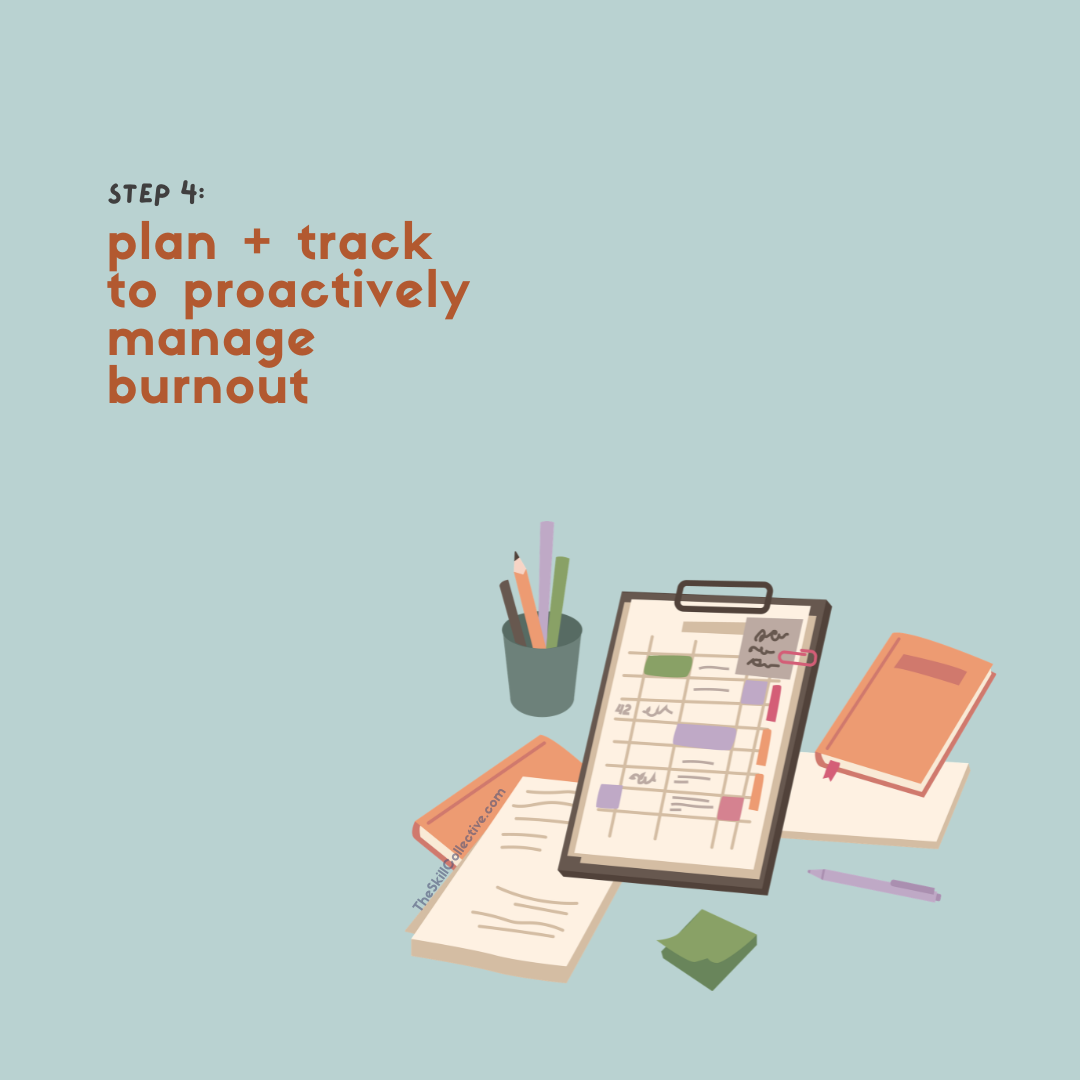
Setting goals is a great exercise, but the magic happens beyond the planning - you do have to make time and space to take action. Often, getting started can be the biggest hurdle - particularly when goals seem overwhelming, or when they are too far away to be pressing… these are moments when procrastination and inaction are most likely to kick in.
To get some momentum, break your larger (and more distal) goals into smaller, concrete, shorter-term steps and schedule these action steps into your diary. In doing so, you are more accountable and can stay on track of progress towards what you want to achieve.
5. review whether your current pace is sustainable + adjust where needed
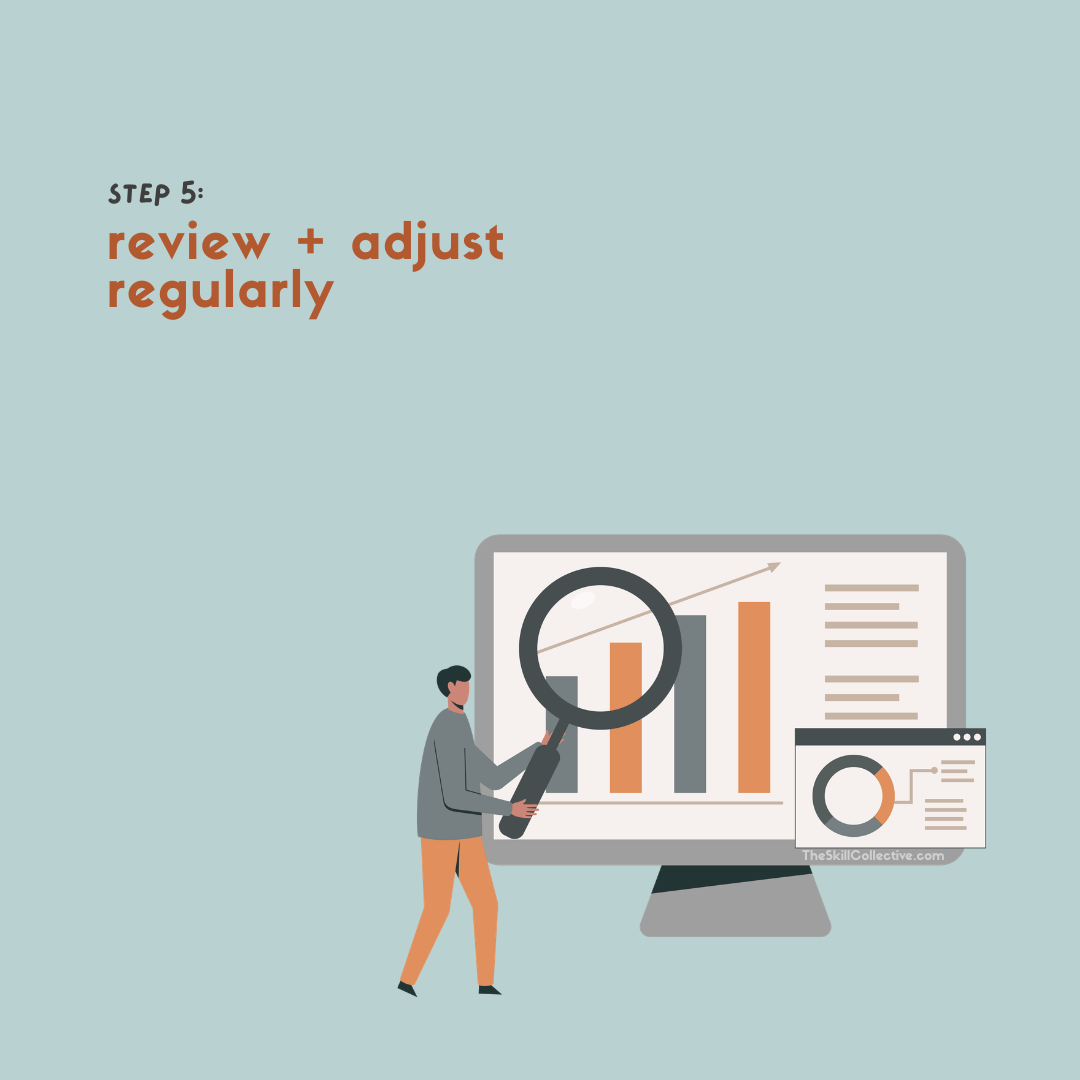
The key to preventing burnout? It’s about regularly review and adjusting what you’re doing, whether it’s sustainable, and adjusting when what you’re doing is no longer working. Life and circumstances change - certain times of the year are more heavily focused on work or studies, whereas your personal life may take centre stage at other times of the year. It’s critical to regularly review:
What’s working, what’s not, and what needs changing and adjusting
What’s on your horizon (particularly any periods of high stress) that may require adjustment. With periods of high stress we also recommend increasing self-care to buffer against the impact of stress and burnout.
Use a planner to help keep track of progress and identify any trends to your busyness or wellbeing. Any planner will do (though we love our Productive Life Planner, designed to cover these 5 points) - you just have to use it regularly!
In summary…
Burnout prevention involves recognising the effects of chronic stress early, building sustainable habits for mind and body, and creating healthier boundaries around work and daily life. Use the above tips to get started, and if you’re after more support take a look below.
help for burnout
Resources
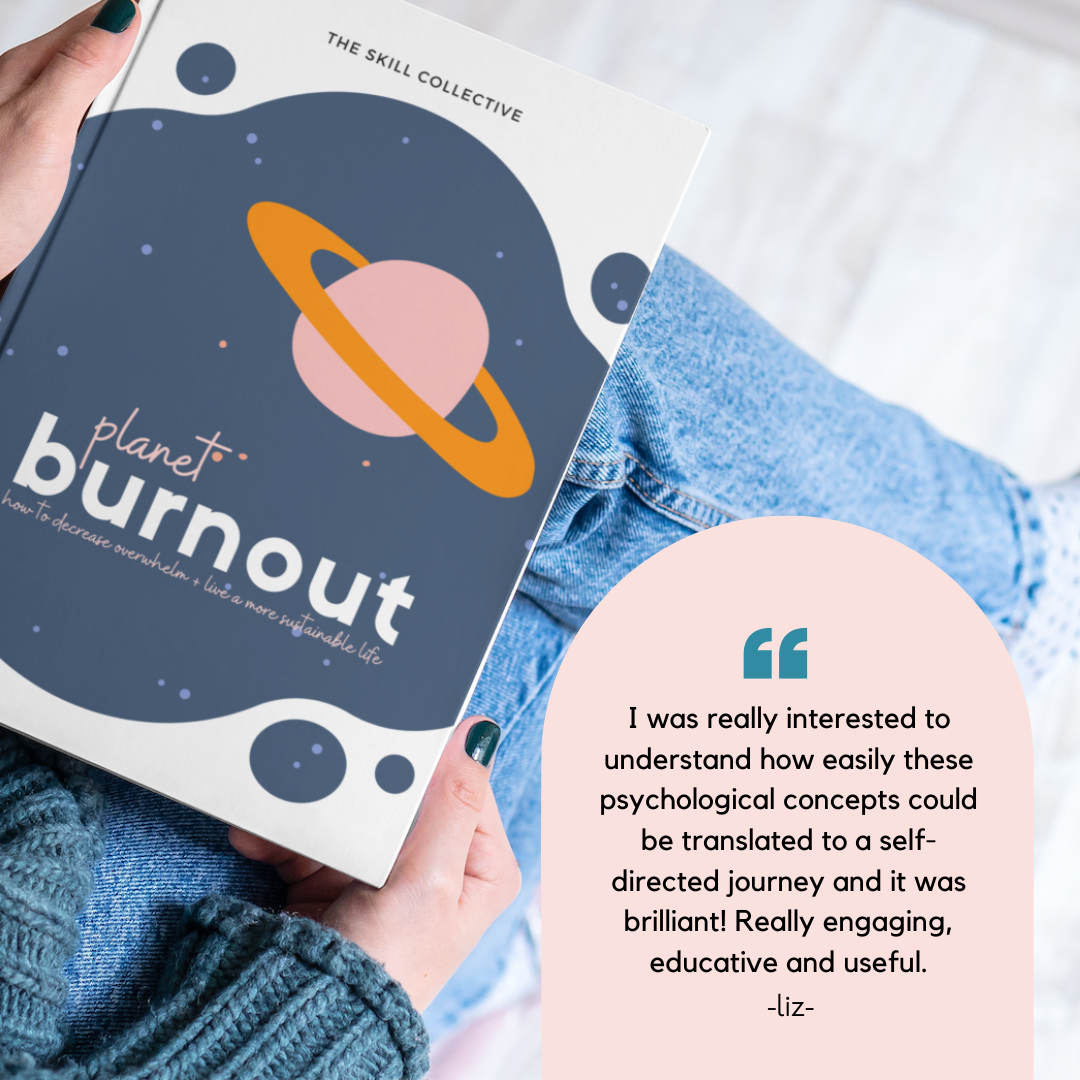
At The Skill Collective we love working with burnout, so much so that we have poured our learnings into our book Planet Burnout.
Burnout isn’t about doing more, but rather about understanding yourself better, shifting mindset and action in moments in time to do things differently.
Tailored support
If stress or burnout are significantly affecting your mental health, relationships, work performance, or daily life we recommend you speak with a qualified health professional. If you’d like a more tailored approach when it comes to burnout - whether it’s prevention or recovery, our team of psychologists can help you build a plan. Below are some of our psychologists who help with burnout.














REFERENCES
Dudau, D.P. (2014). The relation between perfectionism and imposter phenomenon. Procedia – Social and Behavioral Sciences, 127, 129-133. Doi:10.1016/j.sbspro.2014.03.226.
Hesketh, I., & Cooper, C.L. (2014). Leavism at work. Occupational medicine, 4, 146-147.
Jackson, S. E., Schwab, R. C., & Schuler, R. S. (1986). Towards an understanding of the burnout phenomenon. Journal of Applied Psychology 71, 630-640.
Maslach, C., & Leiter, M. P. (2008). The truth about burnout: How organizations cause personal stress and what to do about it. John Wiley & Sons.
Maslach, C., Schaufeli, W.B., & Leither, M.P. (2001). Job burnout. Annual Review in Psychology, 52, 397-422.
Sakulku, J., & Alexander, J. (2011). The imposter phenomenon. International Journal of Behavioral Science, 6, 75-97.
Is perfectionism driving you to procrastinate? It may seem counterintuitive, but a fear of failure can stand in the way of you achieving your goals. Read on to learn more…