

grace downie
Senior Clinical Psychologist
BPsych, MProfPsych, MClinPsych
Grace is a warm, genuine, and down-to-earth Clinical Psychologist who understands that, sometimes, keeping going is exactly what you’ve been doing for too long.
She works with adults who are carrying a lot - people who are used to being capable, responsible, and there for others even when things are difficult. Grace creates a space where you can slow down, breathe a little, and make sense of what you’re experiencing and feel understood without judgement.
You don't need to arrive knowing exactly what's wrong or what you need. Grace will meet you where you are and help you make sense of what's happening, understand yourself more deeply and work towards feeling more grounded, connected and able to move forward.
Grace sees adults.
Grace has a particular interest in what happens psychologically when people are expected to keep going - whether that’s after a critical incident or difficult life event, in the work that they do (esp. first responder or frontline health care), or during the profound transition into parenthood.
She especially enjoys supporting people who spend much of their lives caring for others, looking after everyone else, and putting themselves somewhere further down the list.
Book online with Grace using the button below, or Contact Us if you are new to The Skill Collective or have not seen Grace before.
Please note: Grace does not provide therapy under WorkCover, ICWA, nor does she provide legal reports nor court-mandated treatment.
grace’s areas of interest
-
Grace has extensive experience working with first responders and frontline healthcare professionals (doctors, nurses) whose work regularly exposes them to trauma and other people's worst days.
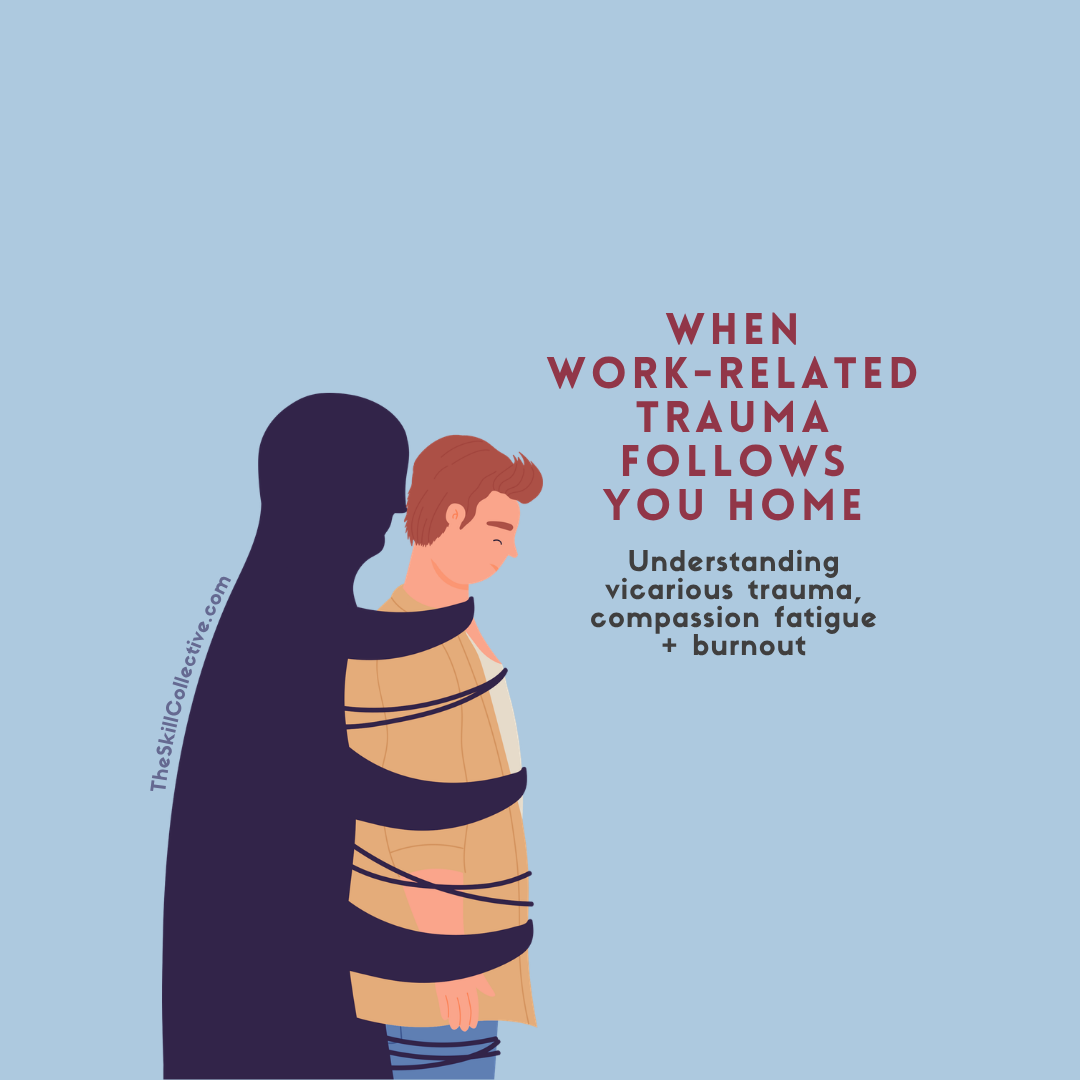
She understands that trauma isn't always one defining event. Sometimes it is the cumulative weight of years spent witnessing, responding to and absorbing difficult experiences.
Grace offers a safe, steady space to begin making sense of what has happened. She helps clients understand how trauma affects the brain and body, develop greater emotional regulation and gradually feel safer and more in control.
Grace is trained in evidence-based trauma therapies, including EMDR (Eye Movement Desensitisation and Reprocessing). She works with clients to process experiences and memories that still feel present, helping them become something that happened then, rather than something that is still happening now.
-
Becoming a mother can change almost everything in your life — your body, relationships, routine, priorities and also your identity.
Yet this is a time when women can feel unsupported and alone in coping with a range of intense feelings, including:
Loving your baby and still feeling overwhelmed.
Feeling grateful and still struggle.
Wanting motherhood deeply yet still missing parts of the person you were before.
Grace supports women through the perinatal and postnatal period, including fertility and family planning, pregnancy, grief, birth and the transition into motherhood.
She understands the weight of expectations around motherhood and the painful gap that can exist between how you thought you would feel and how you actually feel.
Grace provides space to explore identity changes, grief, anxiety, adjustment, relationships and the many emotional complexities of becoming a mother.
There is no single way you are supposed to feel during this transition. Grace works with you to understand what your experience is asking of you.
-
Sometimes life takes a turn you didn't expect, and your life looks different to what you imagined:
A relationship breaks down
You receive a major health diagnosis.
You lose a loved one.
You move cities or countries.
You become a parent or an empty nester
Your work circumstances change.
Even when a change is something you chose or wanted, it can still involve loss.
Grace supports adults through these periods of uncertainty, grief and adjustment. She provides a space to acknowledge what has changed, make sense of what you're feeling and begin to work out your new identity — and what matters to you — in this next chapter.
-
Grace understands that burnout can look very different from what people imagine.
Sometimes it isn't collapsing. It's waking up tired, running on empty, becoming more detached, losing patience, questioning your abilities or realising that things you once cared about don't seem to matter in quite the same way anymore.
For people who work in high-pressure environments, particularly where there is little room for error, being able to switch off can feel almost impossible. When you've spent years being the person who copes, the idea that you might not be coping can be difficult to admit.
Grace works with people experiencing burnout, chronic stress, poor work-life balance and compassion fatigue to understand how they got here and what needs to change.
Together, this might mean examining expectations you've placed on yourself, boundaries you've lost along the way, the ways you've learned to cope, or the parts of your life that have gradually disappeared beneath responsibility.
The aim isn't simply to help you cope with more. It's to help you find a way of living that is more sustainable, connected and genuinely yours.
-
Sometimes you know you're not yourself, but you can't quite explain why.
Anxiety can leave you constantly anticipating what might go wrong. Depression can make everything feel harder — including the things you know are supposed to make you feel better.
Grace works with adults experiencing anxiety and/or depression, helping them understand what is happening beneath the symptoms and what may be keeping the pattern going.
Her approach combines evidence-based psychological therapy with a genuine interest in understanding the person behind the symptoms. Together, she helps clients develop new ways of responding, reconnect with what matters to them and move towards feeling more like themselves again.
articles written by grace
about grace
Grace completed a Bachelor of Psychology, Master of Professional Psychology, and Master of Clinical Psychology at Curtin University. She has experience working with youth, and with police, helping those who have faced trauma and critical incidents, and who live with burnout, stress, anxiety, and depression.
Grace takes a non-judgemental, collaborative approach to create understanding and meaningful change. She uses evidence-based treatments such as Cognitive Behavioural Therapy (CBT), Trauma-focused Cognitive Behavioural Therapy (TF-CBT), Schema Therapy, Cognitive Processing Therapy (CPT), and Eye Movement Desensitisation and Reprocessing (EMDR).
Grace runs her own independent practice and engages The Skill Collective to provide administrative and other business services to support her provision of assessment and treatment to clients.